Blinky's Lab

Geiger Counters, Radiation, Electronics, Projects and Other Random Stuff

Welcome to my lab! Here I write about Geiger counter and radiation related things, experiments, projects and general musings.
  • Posted on

    Archived from radmon.org - originally posted 05/12/2021

    Something I really dislike is planned obsolescence, and closely 2nd to that, where things are not user serviceable and have to be returned to the manufacturer for minor things such as battery replacement. I'm a large advocate of 'right to repair'.

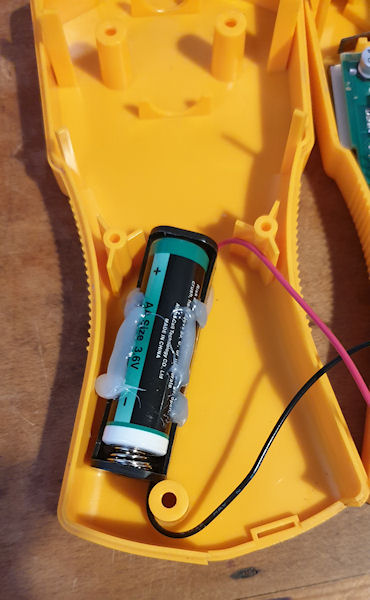
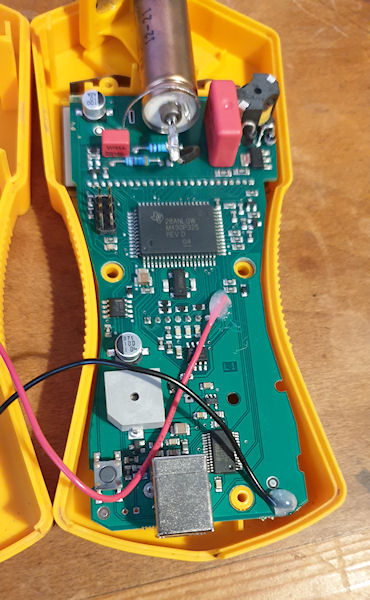
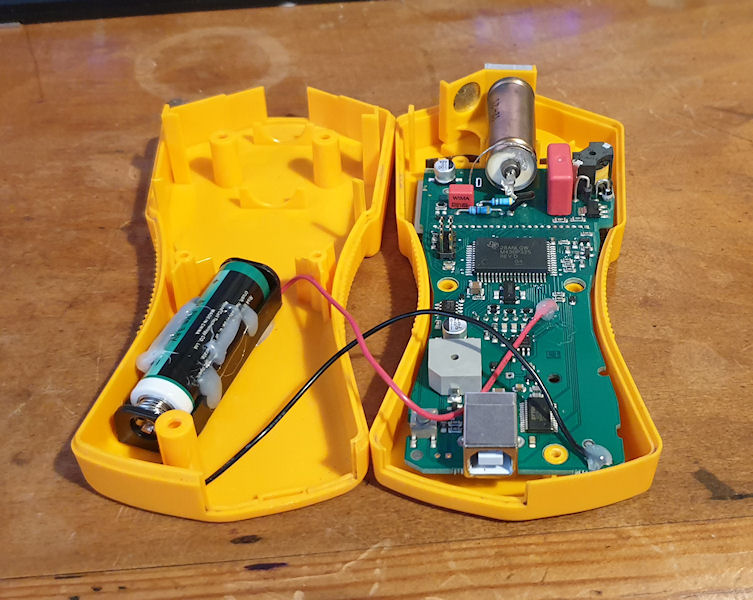
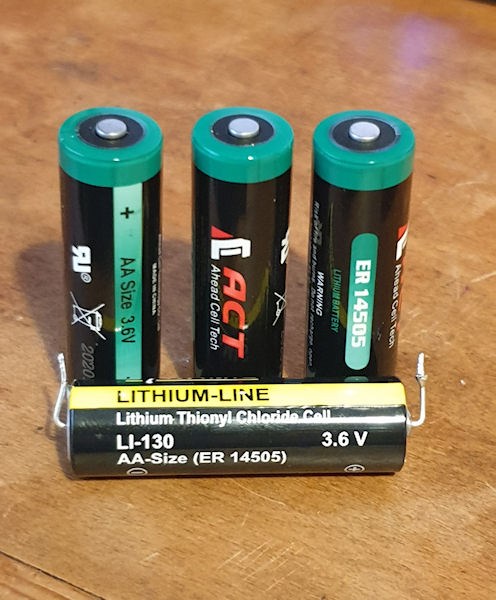
    The battery in the Gamma Scout is a 10 year, 3.6v Lithium battery soldered directly onto the board. Gamma Scout (at last check some time ago) wanted 40 Euro plus shipping one way to Germany to replace the battery. Pfft! The original battery is about £20 all in for a replacement, but I decided to go another route and modify the Gamma Scout to take a replaceable battery. I found a supplier (ebay) of a replaceable battery with the identical specs to the original. I ordered one for ~£4.50 and the seller sent me 4! Bonus! 😄 The whole mod came to about £6.50.
    enter image description here

    Parts needed to mod the Gamma Scout:
    - 1x 3.6v Lithium 3.6v 10 year battery
    - 1x AA battery holder with flying leads
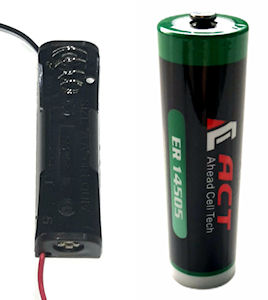
    enter image description here

    Instructions:
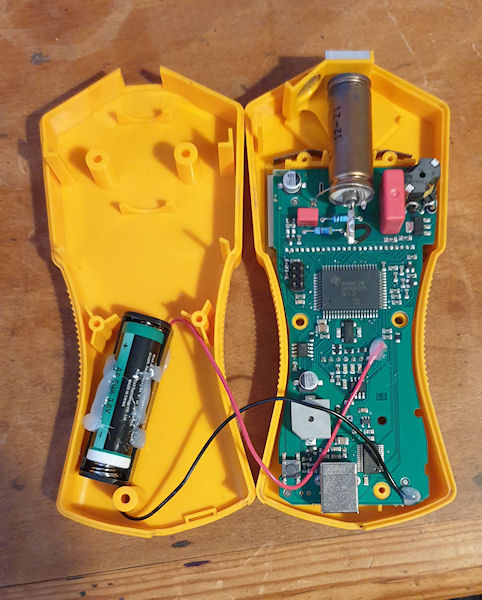
    1. Remove old battery (desolder or just cut the leads, and cut the cable tie)
    2. Solder + and - of battery holder
    3. Insert new replaceable battery
    4. Glue down with hot glue and add a bit of hot glue to the cables where they are soldered to the board. This will act as a small cable strain relief. I also glued the battery into it's holder.
    enter image description here

    enter image description here

    enter image description here

    enter image description here

    Some notes:

    - The placement of the AA holder is about the only place it can go without having to cut away at something. It fits like a glove, like it grew there. The battery holder is in the best orientation for when the Gamma Scout is held upwards by hand, as you normally would.

    You have to be careful with the - wire (black wire), as it is very close to the screw fixing post, and can get trapped if not orientated away from the post.

    - If you are going to do this mod, or simply disassemble your Gamma Scout, now would be a great time to add a very small amount of silicone lube to the a b y selector switch and spring. It made mine much nicer, smoother and has a better positive detent when selecting. It should also cut down on the plastic wearing and reduce tiny plastic particles inside the unit.

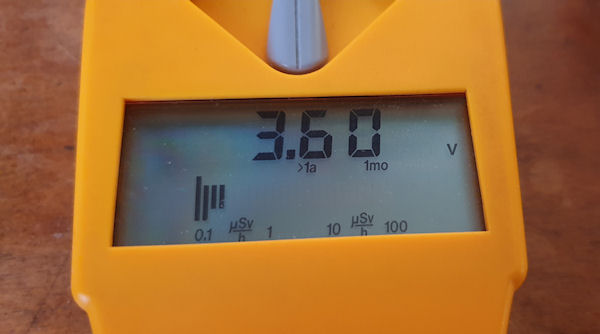
    - When I did the mod, around 6 months ago, the battery read 3.6v. Today it still reads 3.6v. This does go down a little when the clicker is on as the previous battery did.

    - The battery I chose has the same specs as the original: 2,700 mAh nominal (1ma draw), 100ma constant current and 200ma max current.

    - 10 year batteries - There seems to be a misconception with these. Pretty much everyone I know (that are not an electronics engineer) seem to think these should last for 10 years in the appliance. That is incorrect and the 10 year life is their shelf life when they are unused and not fitted into an appliance. 10 years does not mean they will last 10 years. Can you imagine running 100mAh constantly one one of these? It would last no more than 27 hours. And if the battery did last 10 years at 100mAh, the battery capacity would be 8760000mAh, or 8760Ah!

    - The original battery I replaced around May 2021 has a manufacture date of September 2013. It was still working, but when using the clicker the screen was fading away so decided to change it. So it did do well at around 7-8 years!
    enter image description here

    Datasheet for the original battery
    Datasheet for the replacement battery
  • Posted on

    Archived from radmon.org - originally posted 04/12/2021

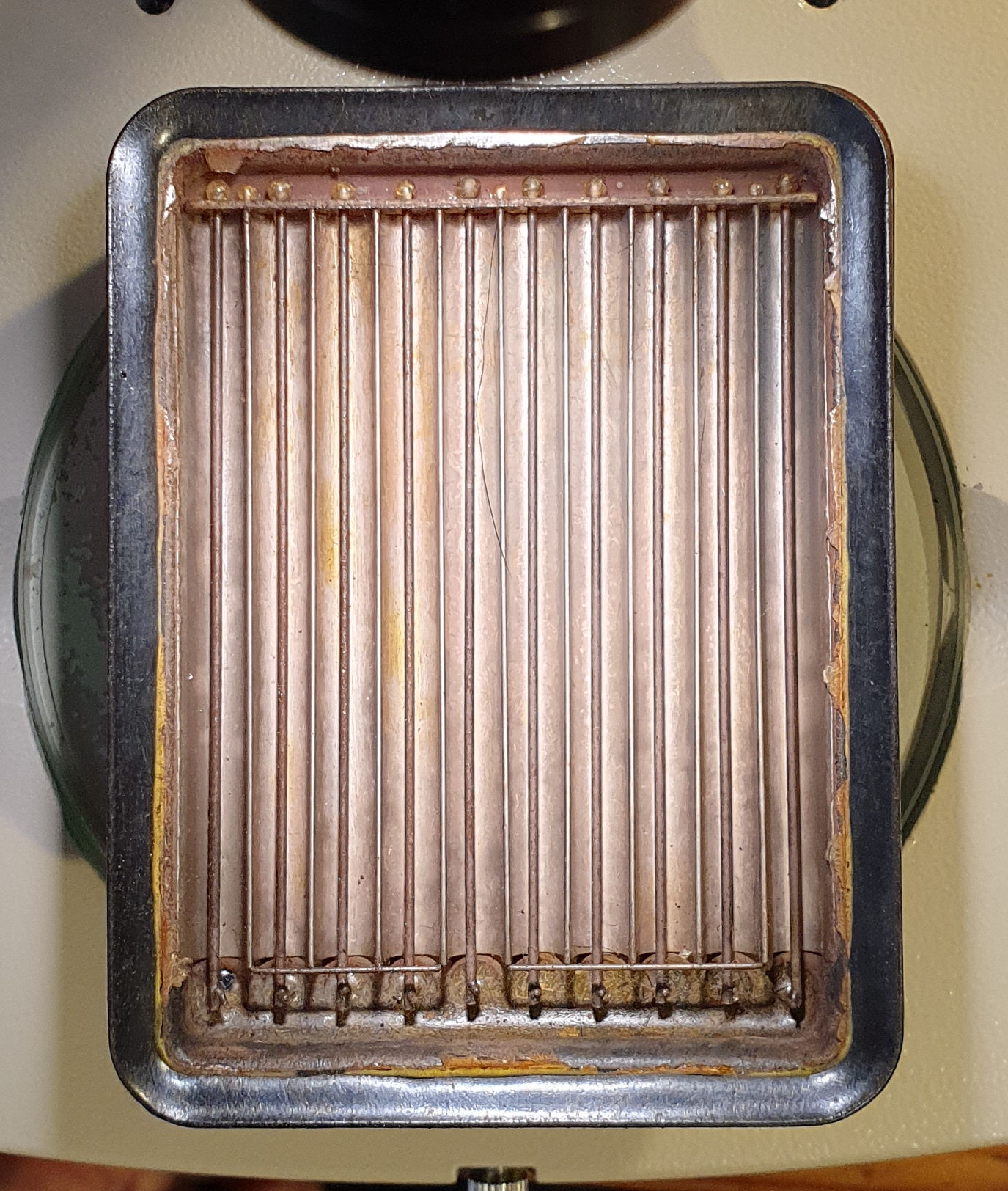
    Well, I managed to destroy my second SBT-10A. The first destroyed itself as far as I am concerned as I took it out of it's box one day, and it was toast - post here . This one was my fault. I dropped a polarizing filter on the mica window (only from about 4cm) but it hit it and went with a proper loud bang, right in my face and showered my microscope and desk with bits of mica, then the black bits on the inside of the mica just turned to a yellow schmoo in the air atmosphere. It would have been a nice experiment had I actually planned it, but I did manage to get some video of the black crystals turning to yellow liquid in real time - below. The volume of the bang was quite extraordinary and made my ears ring. Very, very surprising. It must have had quite the vaccuum in there.

    It had lots of black spots on the mica window, so a few weeks ago I put it under my stereo microscope and I could very clearly see at 45x that they were a crystaline structure. Some were larger than others, they grew next to each other and some on top of others. This game them a very arbitrary shape to the human eye and looked like black blobs. I reckon this was something in the resin that was leaching out over time. My SBT-10A had gotten pretty bad with the black spots, but still worked and performed as it always had. Until I broke it.... Grrrr.... So, since it was destroyed, already showered me in mica and whatever else, I guess a safety requirement for handling it wasn't justified any more so just cleaned it up and took some photos of the tube without the mica window. The photos aren't really that interesting but we do get to see the insides of a SBT-10A and the video of the black crystals breaking down is pretty good.

    enter image description here

    enter image description here

    enter image description here

    enter image description here

    enter image description here

    enter image description here

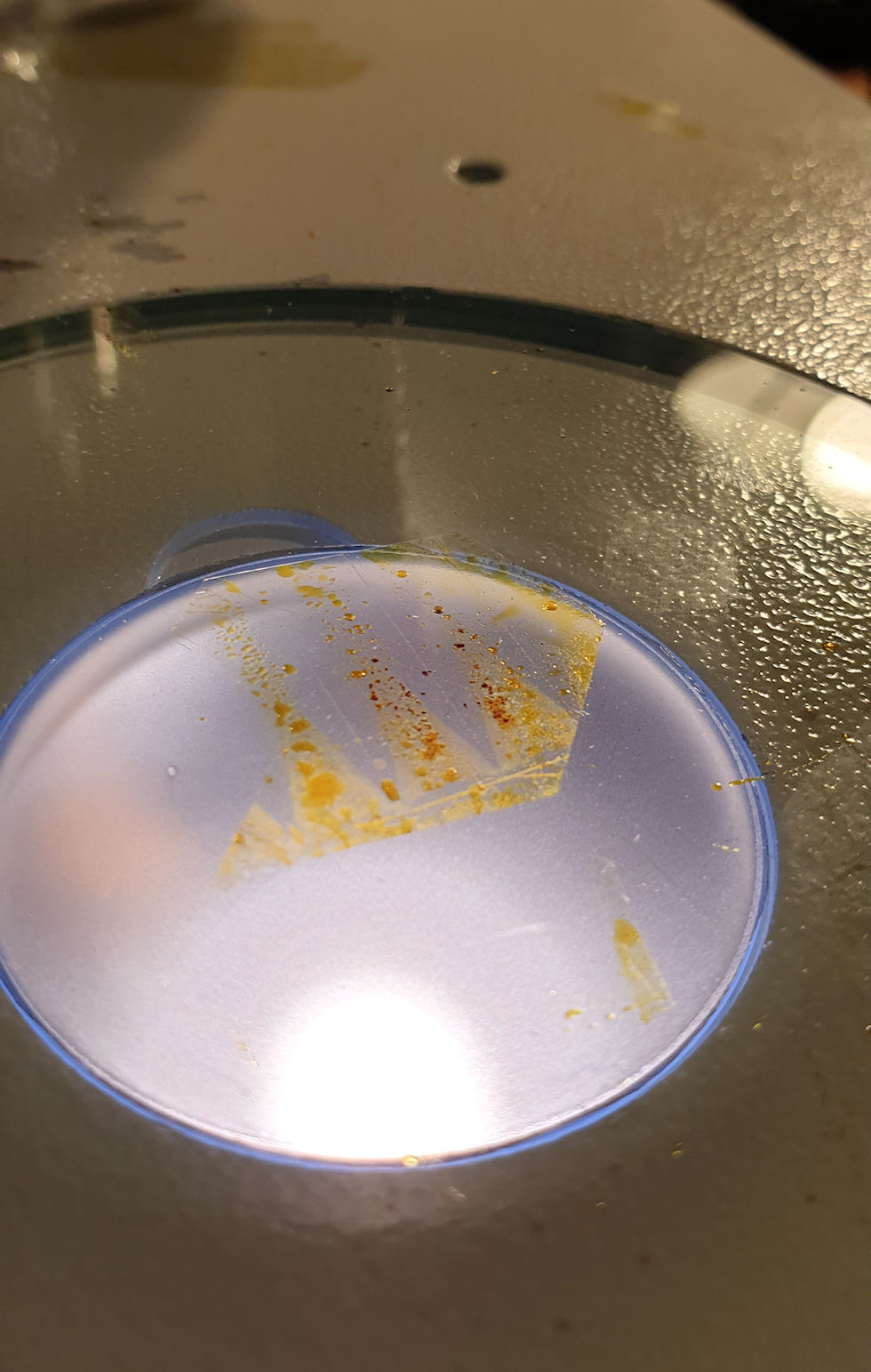
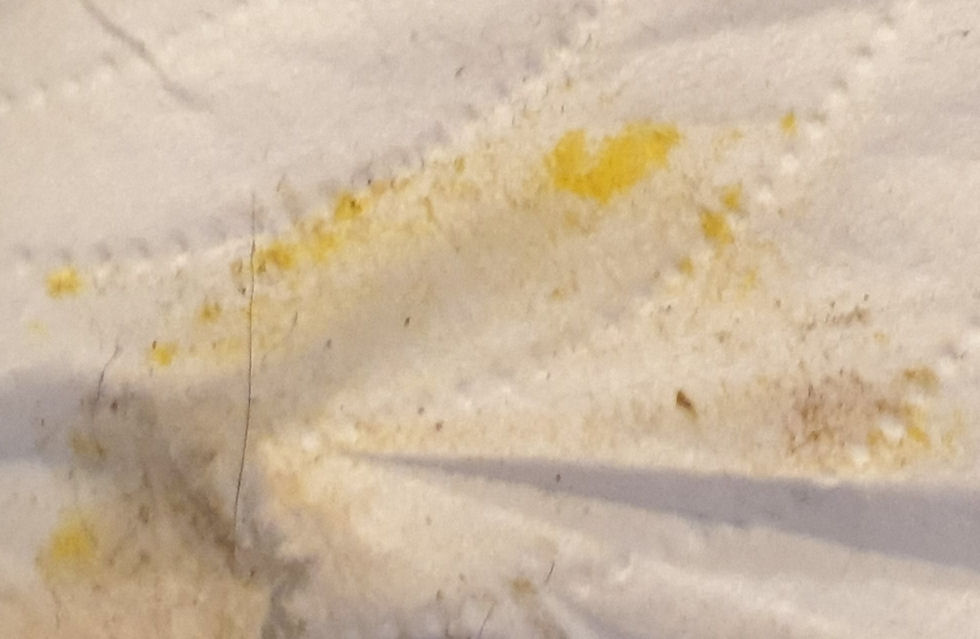
    Below is a piece of the mica that I made the video with and some yellow schmoo that I cleaned up with a tissue.

    enter image description here

    enter image description here

    Finally, this video shows the black crystals breaking down into the yellow schmoo. Fun times! 😄

    It is very possible the substance was absorbing water from the air as it appeared the volume of liquid was greater than the initial substance. It could also be that the crystals/substance was either used to, or required an extremely low pressure environment and introducing it into a high(er) pressure environment forced the moisture into the substance. Was interesting to see and I'm glad I caught it on video. As soon as I saw the liquid moving I started recording and the whole thing lasted about 4-5 minutes from start to finish. I missed the first minute, or just over, with all the panic of the thing blowing up on me!

    So, do I buy another SBT-10A?..... I do like the tube and it does make a nice part of my collection, but I dunno if I can risk breaking another!

  • Posted on

    Archived from radmon.org - originally posted 06/12/2021

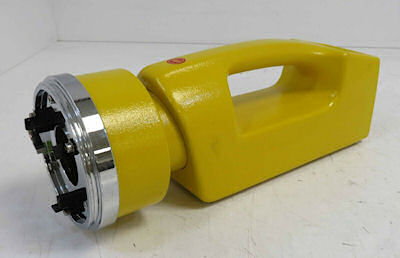
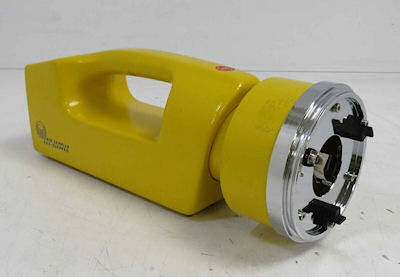
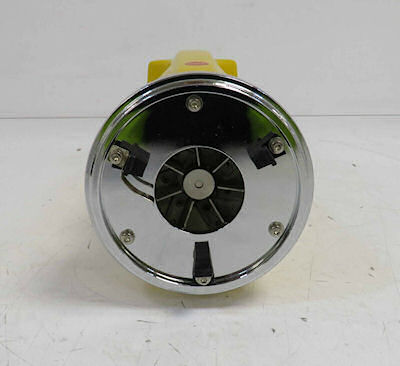
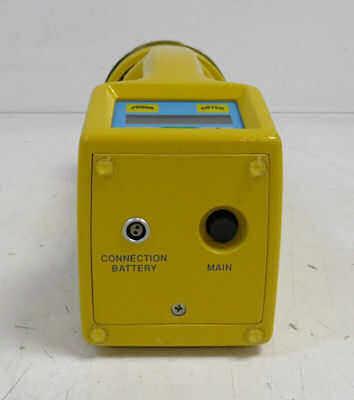
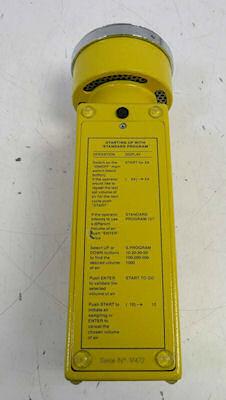
    I have bought a 'PBI Microbial Air Sampler SAS Super 90' just for the simple fact it looked proper funky! I have no idea if it works, or how it works, or even exactly what it does, but bought it for shits and giggles. I paid £15. Working, they are going for about £1000!

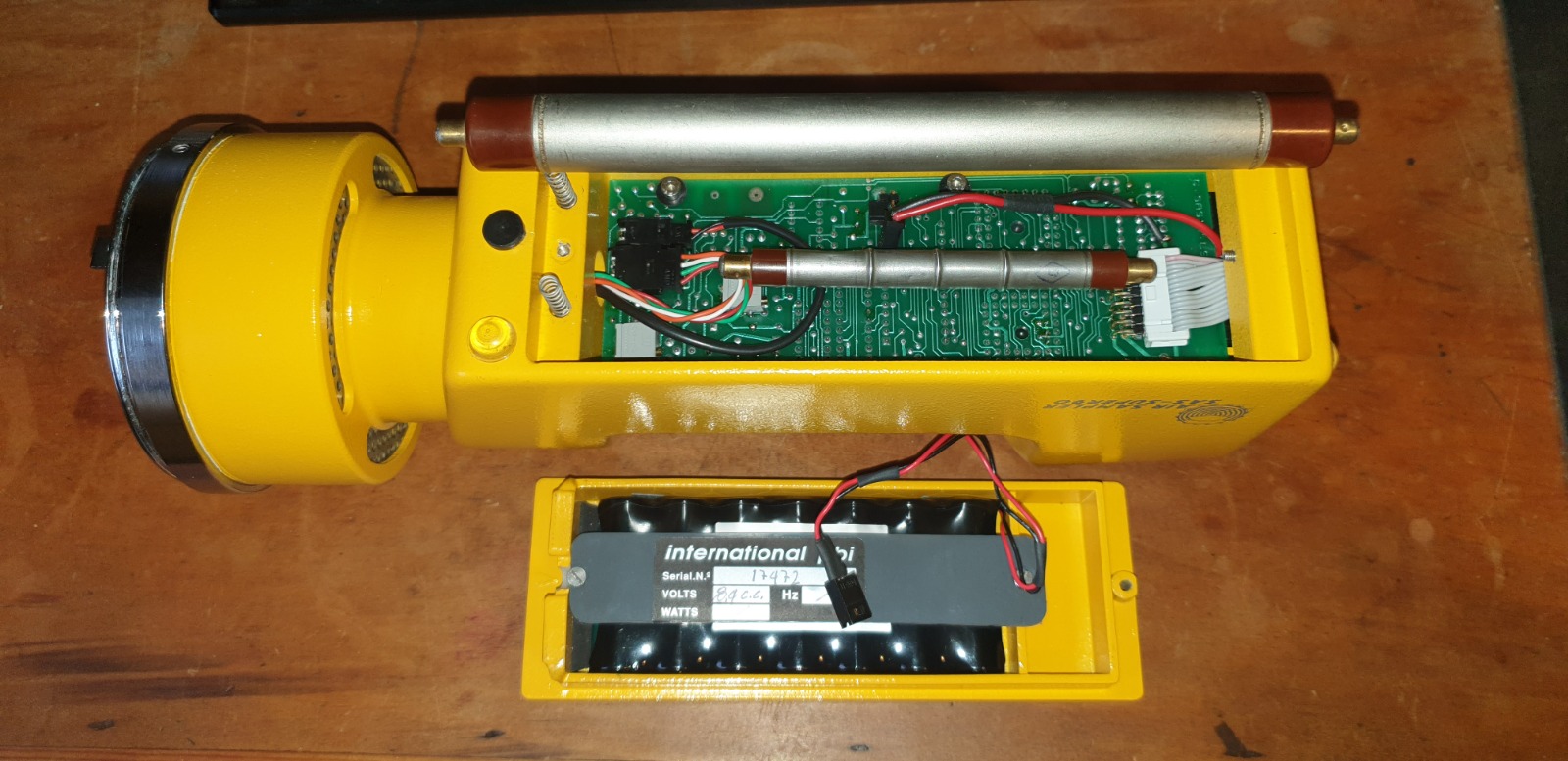
    I care not for testing microbes in the air, so I figure I can make something with it. So far I have thought I can turn it into a ridiculously powerful flash light. Something around 100w LED. I could use a liquid cooler in the body, LED and smallish heatsink at the end, use the display for something, temperature, power and battery remaining, and have a large LiPO pack over my shoulder. Or I could turn it into a nice portable PM2.5/PM10 air quality meter, and I have all the parts for that already. Or I thought of maybe a portable homebrew Radon gas meter. I could pull air inside the body and have it run through a filter. There could be a GM tube close to the filter, with a servo operated shield that shields the tube from the filter when collecting air, then samples for x seconds, then repeats. Any gamma radiation (Radon decay chain) coming from the filter would be measured by the counter.
    I really think I have to do something with it because it just looks so cool! There is some kind of cap missing from the end, maybe a filter or something, but that doesn't matter.

    enter image description here

    enter image description here

    enter image description here

    enter image description here

    enter image description here

    Hmm, thinking about it I could have a SI8B or similar tube up front, I already have some low sensitivity tubes (DOB50, DOB80, SI3BG and I think 3G8B is also low sensitivity.) I would also want a very sensitive tube monitoring background. I do have a couple of SI22G's that would probably work. Then the electronics... SD Card logging, GPS, an analogue meter would be nice, but that would have to replace the LCD and I don't think it would look quite right. I'll have to wait until I get it to work out exactly what can be done with it. I do think it would be a great project.
    And today I received my SAS Super 90!

    The space inside the case isn't large enough for the SI22G tubes. Plenty large enough for SBM-20s, but I wanted something with the sensitivity akin to the SI22G. I'll have to look about for something suitable, or think of something else.

    enter image description here

    And now I have just the right tube for this project. It is an SI8B pancake GM tube. 80mm case and about 60mm window. It will be good for hard and soft beta and gamma. Now I just need to find some other tubes to fit in the base for background monitoring.

    enter image description here

  • Posted on

    Archived from radmon.org - originally posted 04/10/2019

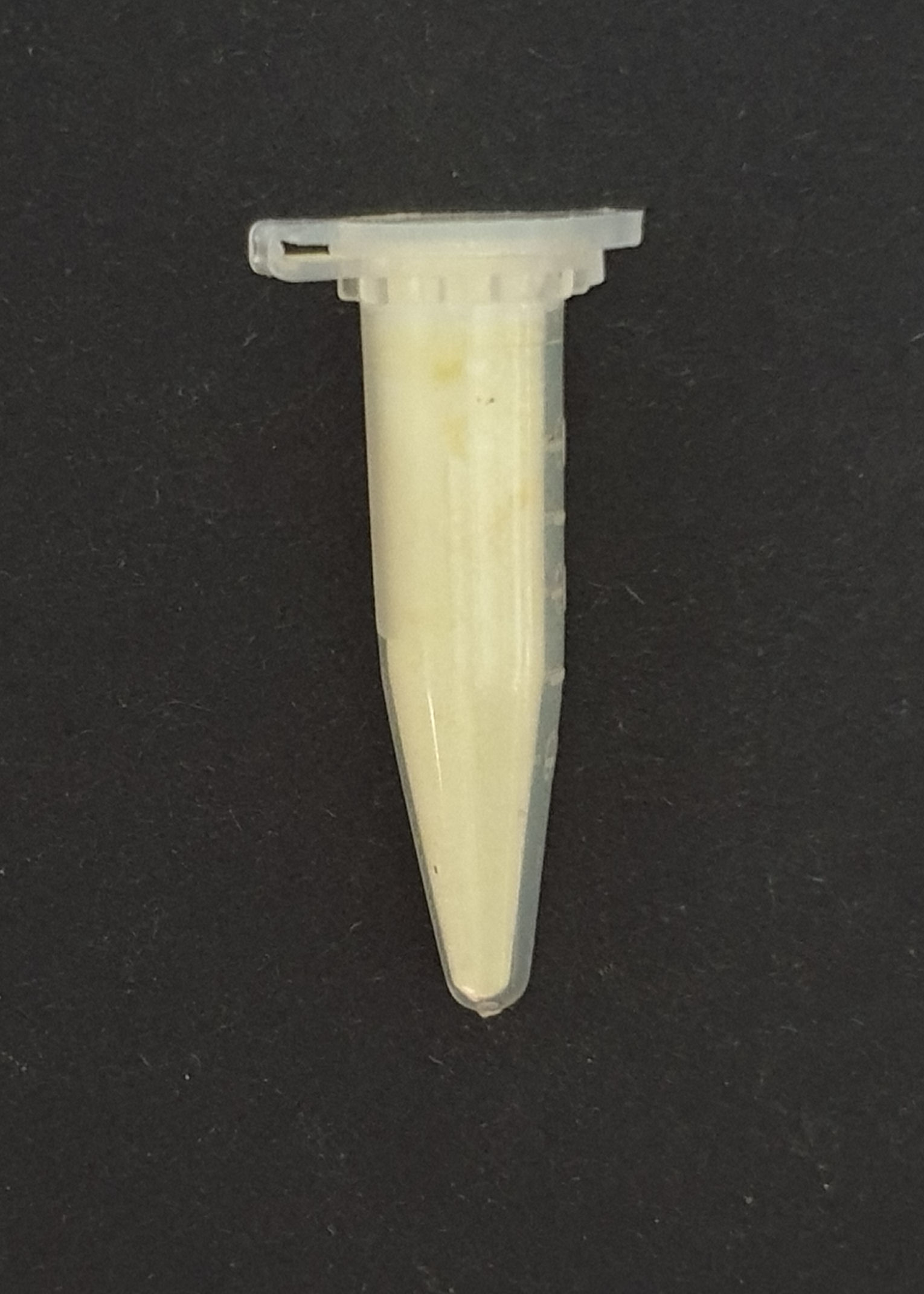
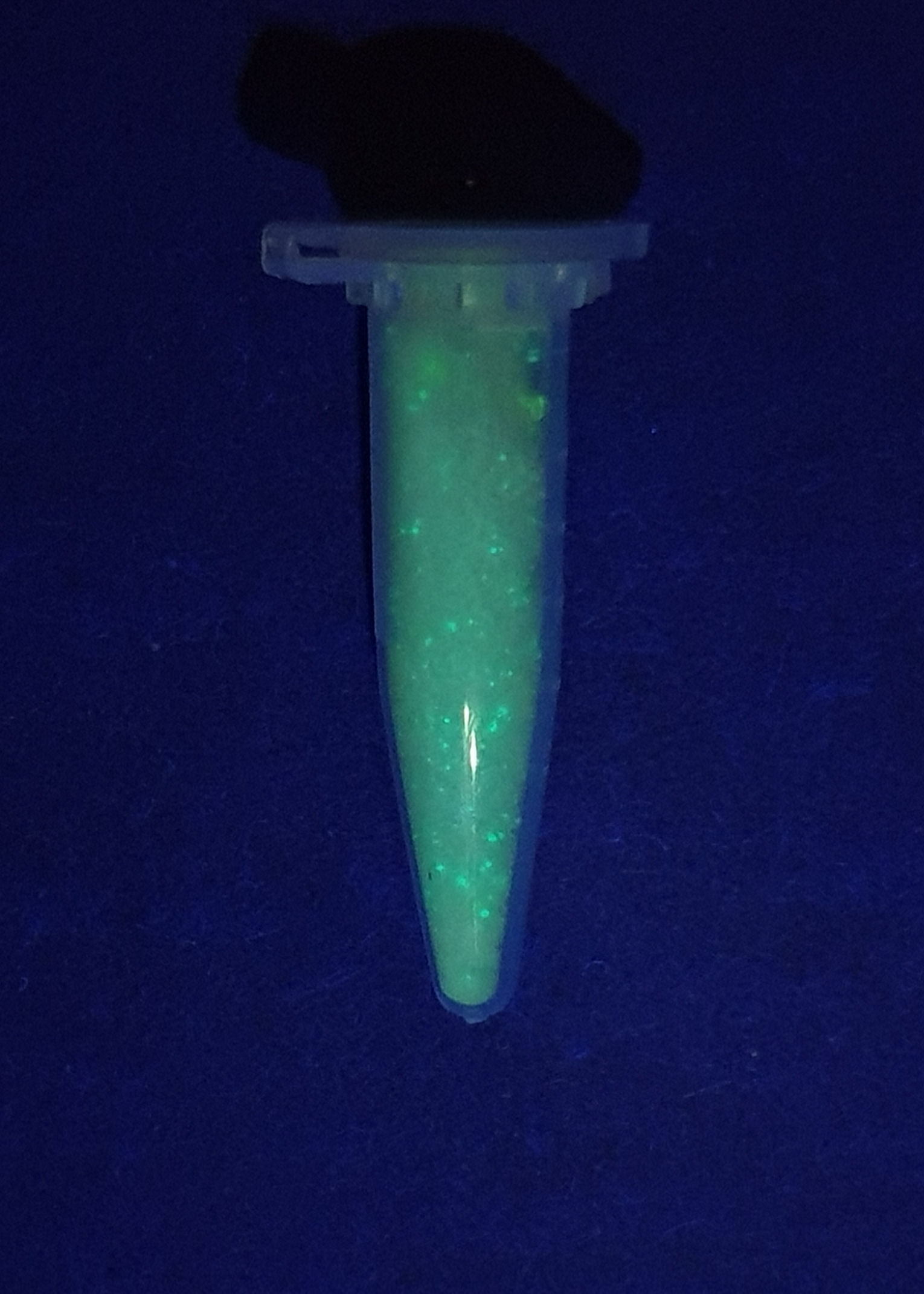
    There is currently Uranium Element sample - Uranyl Zinc Acetate (ZnUO2) for sale on Ebay (UK) (At the time of writing 04 October 2019). I have just received mine and it gets a respectable ~2000cpm sat right next to a SBM-20. This is the same seller I have gotten Uranium dioxide (UO2yellow cake) and Uranium trioxide (UO3) from. He seems reliable and have exchanged the odd email with him. If you decide to buy you will get a small amount, about 0.5g in a small vile (as terribly pictured below...). Also please note that I have absolutely no affiliation with the seller, he is simply someone I have bought a few different radioactive samples from. I am also not sure on whether he will ship abroad so if interested give him a shout. He may also still have some UO2 and UO3 available as I think his Ebay listings were taken down for those samples, so worth contacting him if interested.

    Search for 'Uranium Element sample - Uranyl Zinc Acetate - Geiger Counter Check Source' Ebay item # 274019258194 and the seller is 'rogers-nuclear' - Long gone.

    Edit: Please note this is a powder and as such extra precautions should be used when handling it. It is not something you want to inhale at all!

    enter image description here

    enter image description here

  • Posted on
    Autunite

    Archived from radmon.org - originally posted 06/09/2019

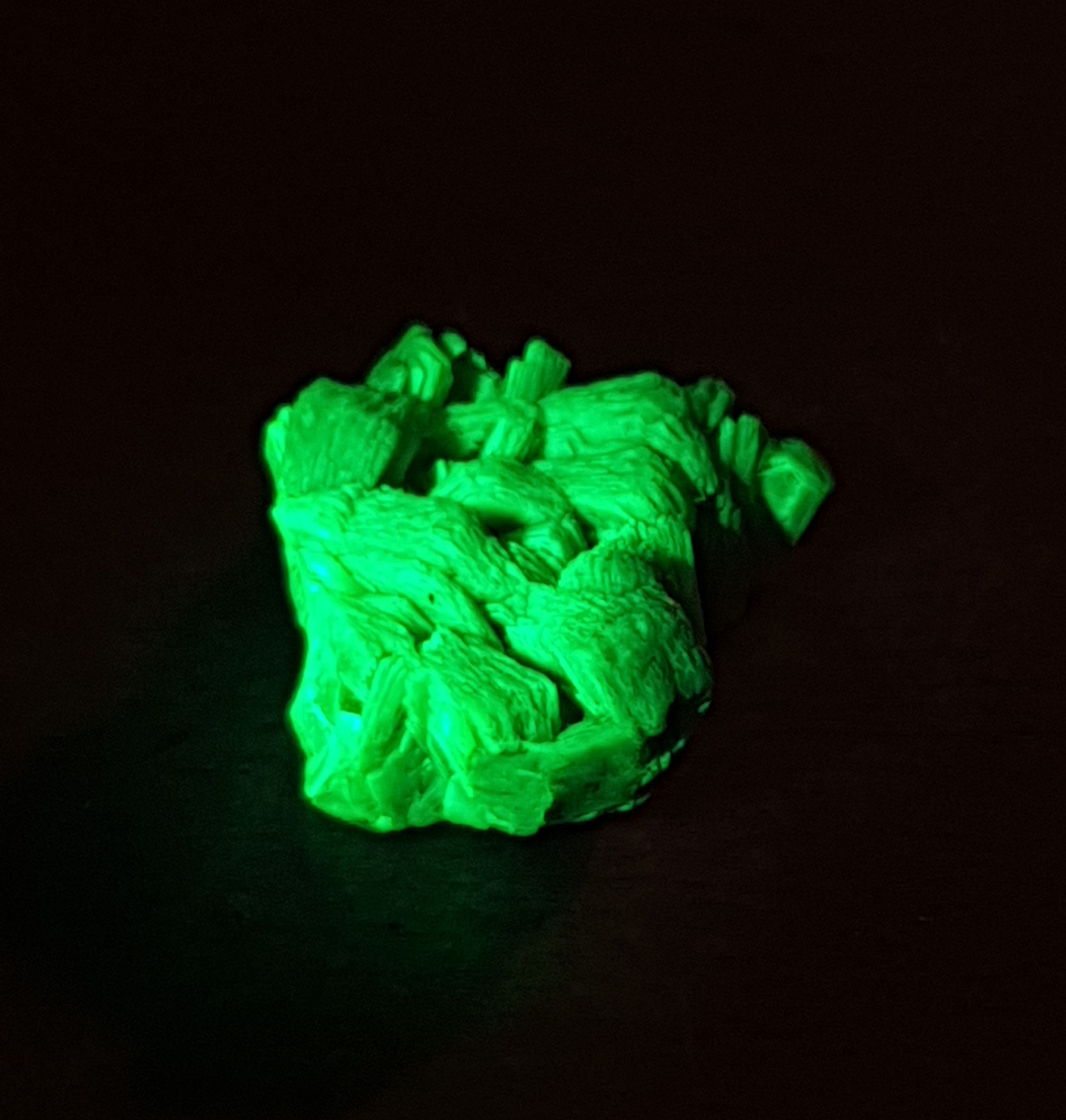
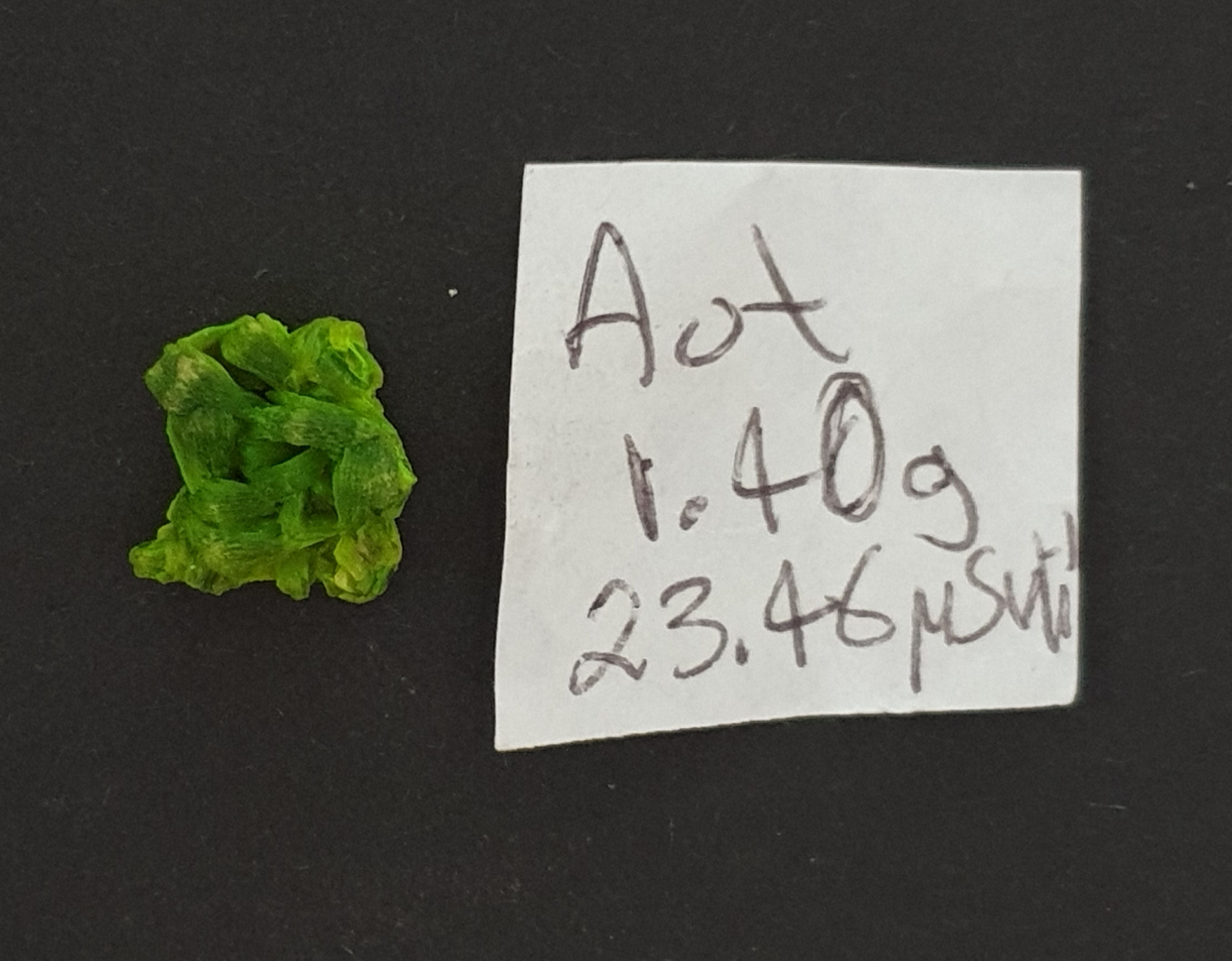
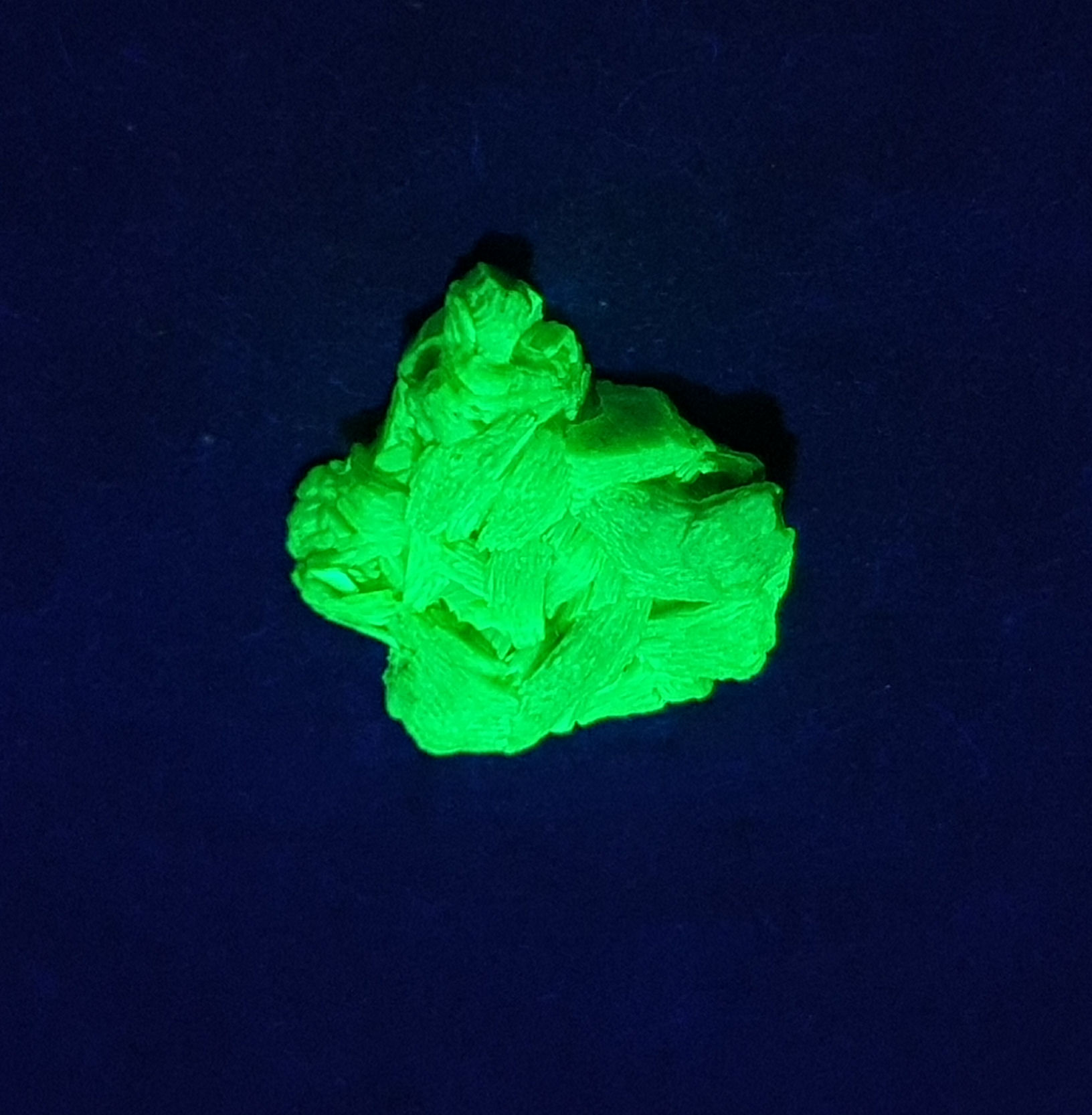
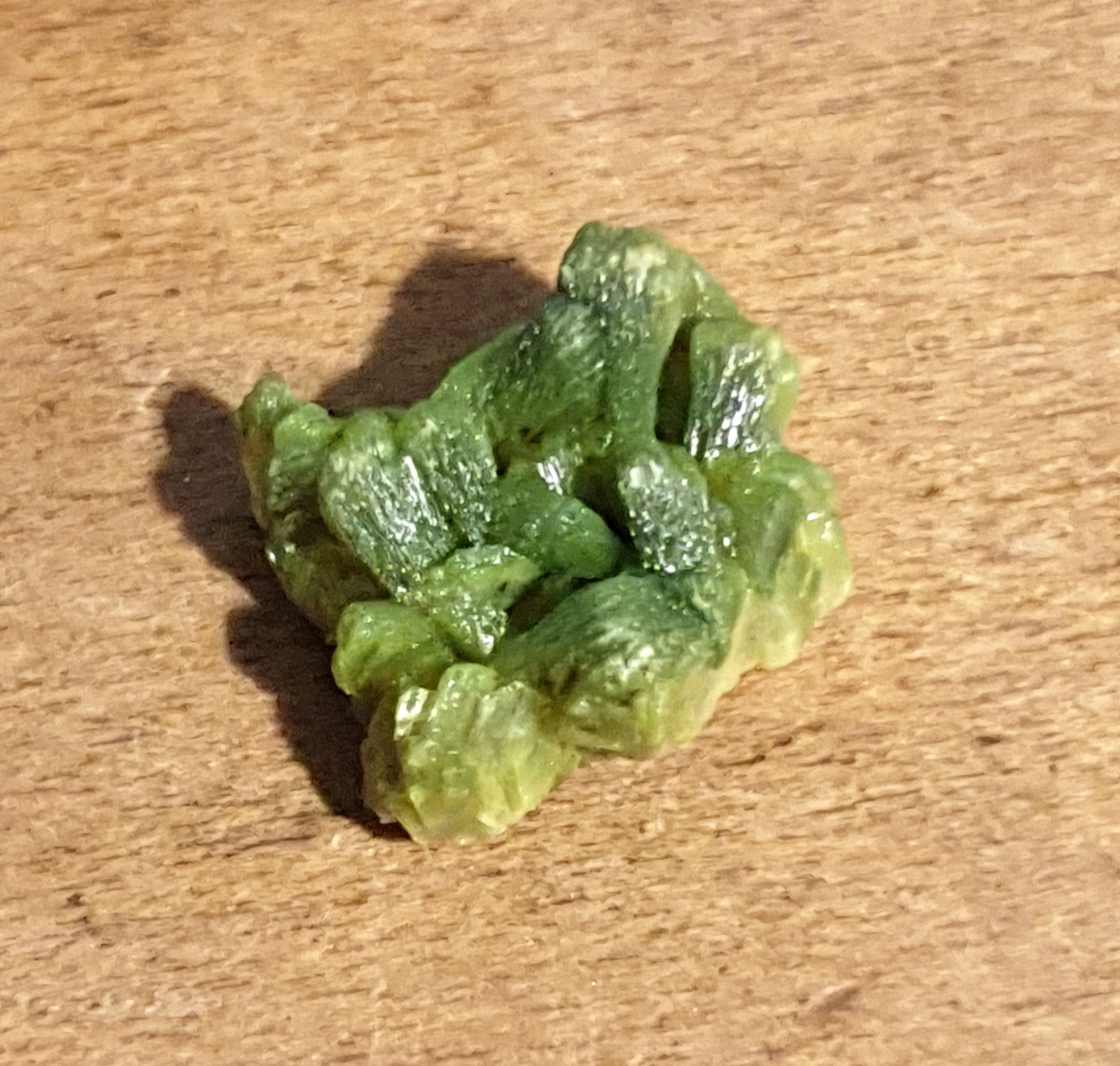
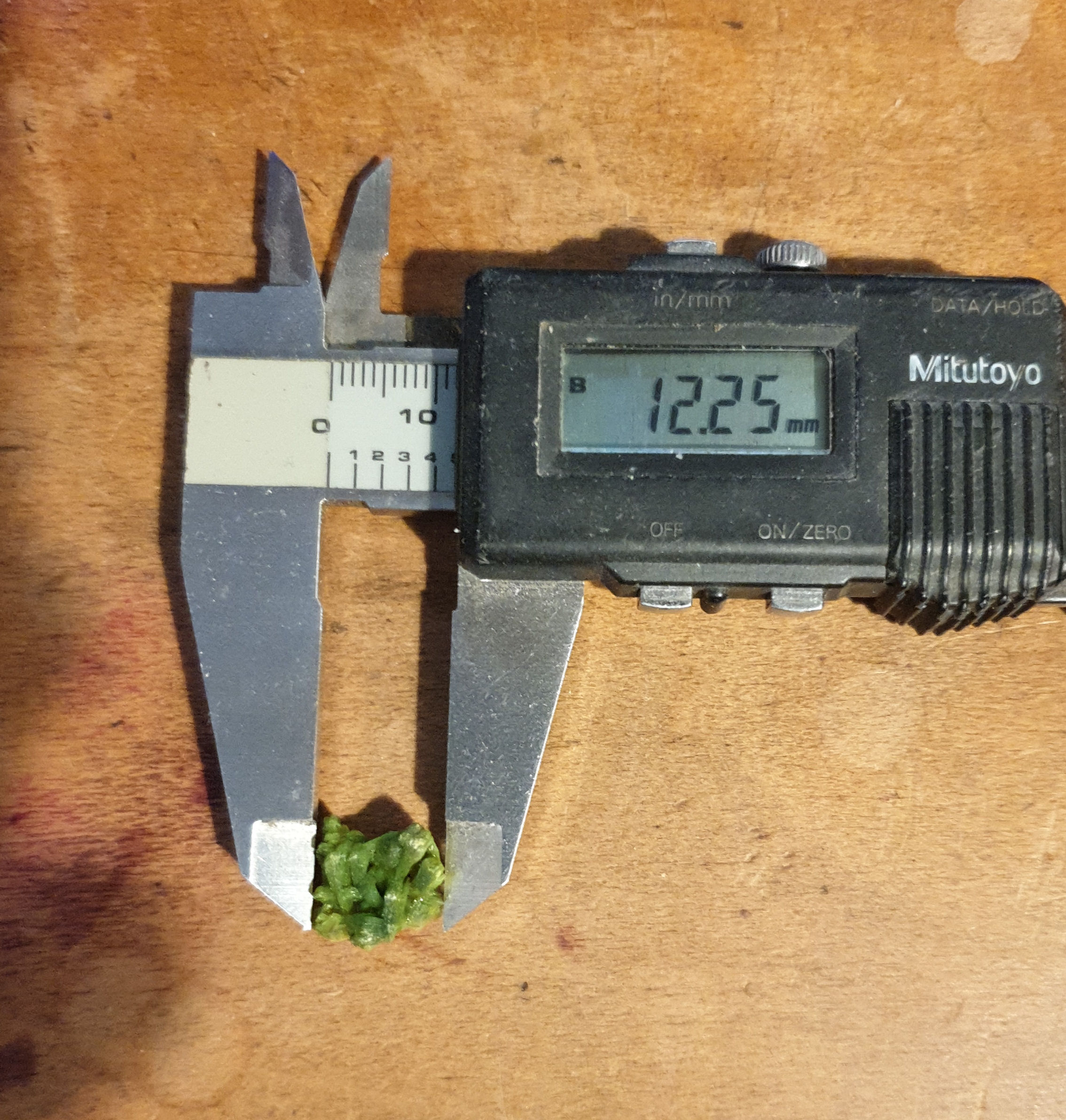
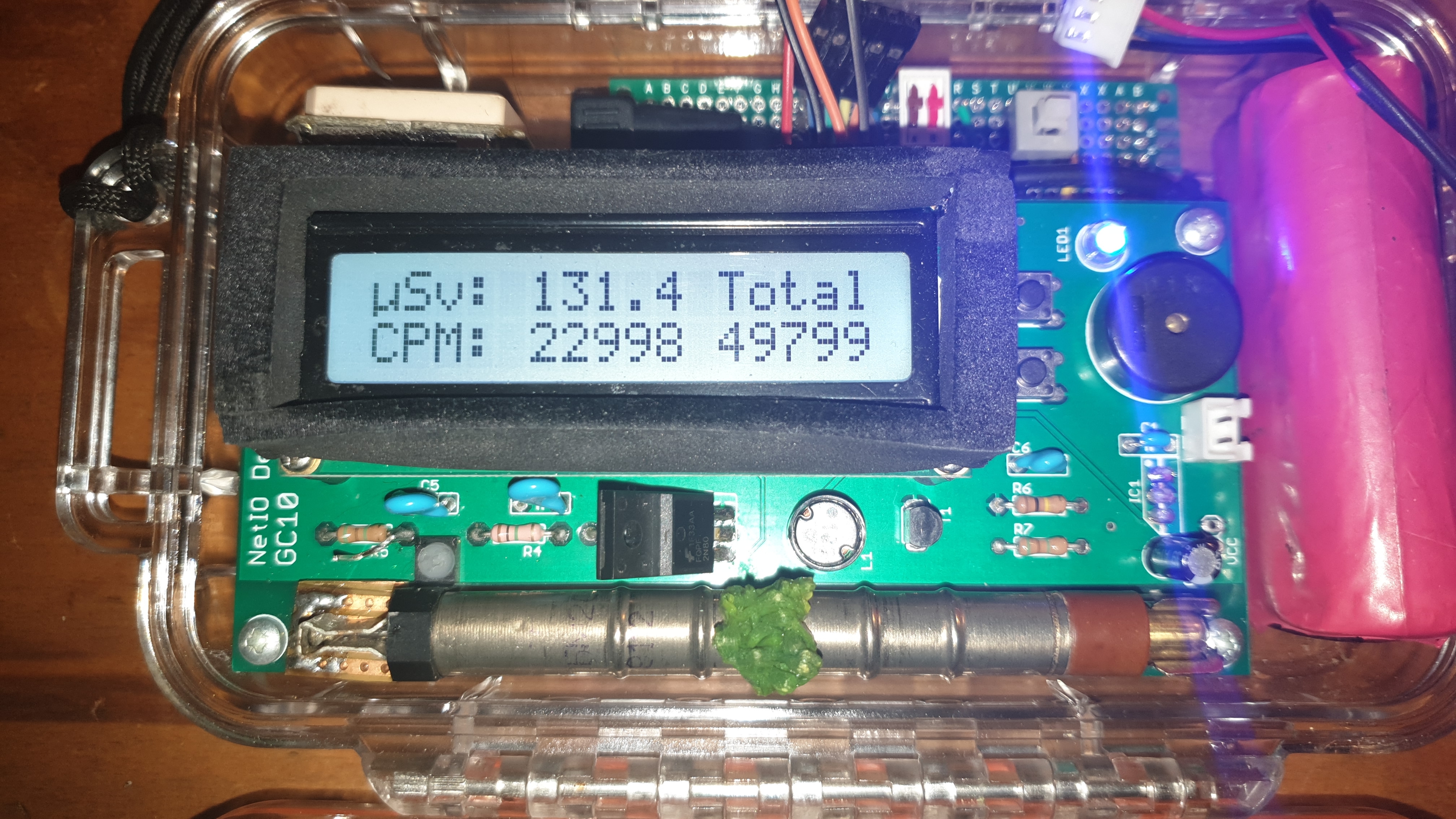
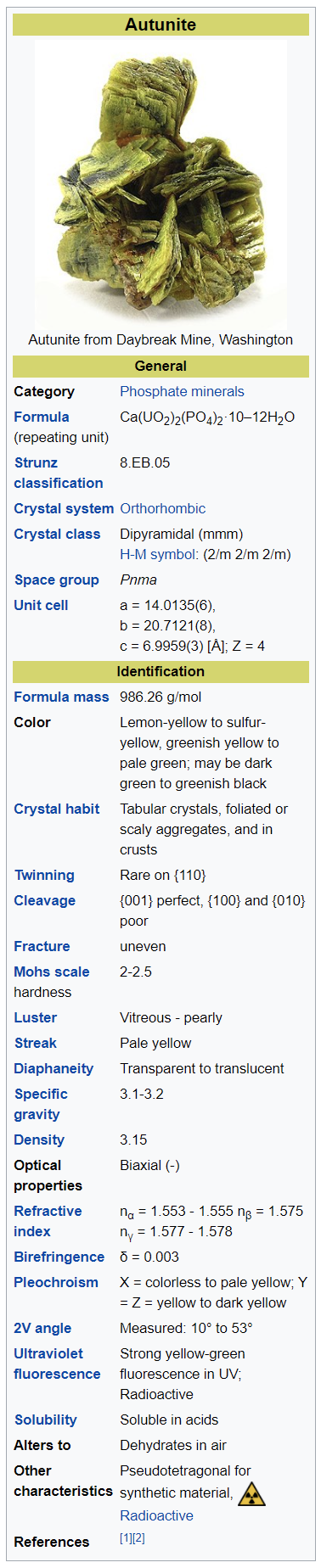
    I have just received my latest specimen, Autunite. It is quite fantastic! It is tiny, quite spicy and fluoresces like I have never seen before. The pictures don't do it justice as the colour is strikingly vibrant and has more of a yellow than green fluorescence. I struggled taking photos of it due to the amount of light it produces when it fluoresces. Like trying to take pictures of a light bulb! I took a few pictures with differing light levels. A selection are below. 22,000 CPM on a SBM-20 is quite spicy! Very happy with it.

    "Autunite (hydrated calcium uranyl phosphate), with formula Ca(UO2)2(PO4)2·10–12H2O, is a yellow-greenish fluorescent phosphate mineral... ...Due to the moderate uranium content of 48.27% it is radioactive and also used as uranium ore" https://en.wikipedia.org/wiki/Autunite There are a couple of sellers on ebay at the time of writing with some specimens. Search for 'Autunite'.

    enter image description here

    enter image description here

    enter image description here

    enter image description here

    enter image description here

    enter image description here

  • Posted on

    Archived from radmon.org - originally posted 27/08/2019

    This is a list of the common radioactive sources available on ebay (at the time of writing - 31/08/2019)

    They vary a lot in radioactivity and I own all of these so I will try and give you my opinion of how active they are using an SBM-20 tube, in a rough, roundabout way. They will be marked 1 to 5 (5 being most active) based on the samples I own and based against each other. Where I have included the emission type (a, b & y (alpha, beta & gamma)) this is the overall emission. A lot of the different radiation types are caused from the main radionuclide decaying into other radionuclides. It is worth noting that different samples, even of the same type will more than likely produce different levels of radiation. For instance I have a Uranium glass sample (the one in my profile picture) and a Uranium glass vanity tray. The vanity tray is about 25x the volume/weight of the sample, yet the sample is very much more active than the tray. When buying rare samples, ores and minerals or other specific radioactive things the buyers will sometimes state 'high activity' or words to the effect.

    Fiesta Ware: It is a Uranium glaze on pottery. Pretty active (b & y). Does not fluoresce. Geiger click score: 4/5 Ebay search: 'fiesta ware' 'fiestaware' 'uranium glaze' 'uranium pottery' enter image description here

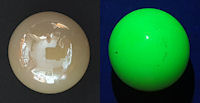
    Uranium Glass: It is a glass coloured using Uranium similar to Vaseline glass. It does fluoresce. It's active (b). Geiger click score: 2/5 Ebay search: 'uranium glass' 'vaseline glass' enter image description here

    Vaseline Glass: Just like Uranium glass but different colour. It does fluoresce. Not very active (b & y(?)). SBM-20 click score: 1/5 Ebay search: 'vaseline glass' 'uranium glass' enter image description here

    Thorium Gas Mantle: A gas mantle impregnated with Thorium. Does not fluoresce. Goes like Billy'o (a, b & y). SBM-20 click score: 4.5/5 Ebay search: 'thorium mantle' enter image description here

    Thorium Tungsten Electrode: A Tungsten welding rod with <2% Thorium. Does not fluoresce. Hardly active (a, b & y). SBM-20 click score: 0.5/5 Ebay search: 'thorium tungsten' 'thorium electrode' enter image description here

    Americium disc: A small disc of Americium used in smoke detectors. Does not fluoresce. Quite active* (a, b & y). SBM-20 click score 3/5 Ebay search: 'americium' 'geiger smoke sensor' *Goes to 11 when using a tube capable of detecting alpha - LND-712 alpha tube click score 10/5, but does have to be close. enter image description here

    Tritium Gas: A small Phosphor coated tube of Tritium gas. It does fluoresce and glows in the dark. Hardly even noticeable** (b). SBM-20 click score 0.1/5 Ebay search: 'tritium' **Quite detectable with a scintillation meter. enter image description here

    Potassium Chloride: Also known as Potassium salt or KCI. Preferably has to be pure >99%. Does not fluoresce. Not very active (b & y). SBM-20 click score: 1/5 Ebay search: 'potassium chloride' 'potassium salt' enter image description here

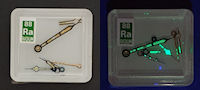
    Radium Ra-226: Used mainly in the past for 'glow in the dark' watch hands and clock dials. Some heavy concentrations can be found on old aircraft clocks and dials. It does fluoresce. Quite active (a & b). SBM-20 click score: 2.5/5 Ebay search: 'radium' 'radium watch hands' enter image description here

    Uranium Ore: Just that, also known as Pitchblende. Does not fluoresce***. Reasonably active. SBM-20 click score 3/5 Ebay search: 'uranium ore' 'pitchblende' ***If you get Pitchblende with Gummite on it, the Gummite will fluoresce. enter image description here

    There are other natural forms of Uranium available on ebay. I don't have any so I can't comment on them. But the search terms are: 'uraninite' 'torbernite' 'autunite' 'gummite'

    It is also worth searching for the general keywords such as 'uranium' 'thorium' etc. as occasionally you will find a hidden gem amongst the cruft. It was through that I managed to find Uranium trioxide sample, Uranium dioxide sample (yellowcake), soil contaminated with Uranium and Radium (from near a Uranium mine in Germany) and Thoriated cotton (some weird dirty looking fluffy stuff with tiny rocks mixed in - from a mine in Wales). So with some thorough searching you can sometimes find those rare gems and some really make the Geiger click!

    A note on safety. Some of these sources can be very harmful and potentially deadly (over time) if inhaled or ingested. Take Radium watch hands for example; the sources are usually a number of years old and the Radium (paint) can crumble and fall off the watch hands very very easily. It is too easy to get this on your fingers then inadvertently be ingested. Besides the radioactivity of the substance a lot are also biologically toxic to humans and other animals. When buying any radioactive source it is prudent to know your substance and learn about the hazards involved with it. If in doubt always wear gloves, keep a clean area when using the samples and clean/wipe down surfaces and wash hands after use. Always keep sources in a suitable container. Internet search for 'Radium girls'. A very sad but informative story.

  • Posted on

    Archived from radmon.org - originally posted 25/08/2019

    I thought I would try and collate a good list of old and new disaster and post apocalyptic films. Below are the films I have/have watched (Some I haven't watched as yet).

    Nuclear disaster:
    The Day After (1983)
    Threads (1984)
    Chernobyl HBO miniseries (2019)
    The War Game (1965)
    Dr Strangelove (1964)
    Broken Arrow (1996)
    Chernobyl Diaries (2012)
    Fat Man and Little Boy (1989)
    The China Syndrome (1979)


    Biological disaster:
    28 Days Later (2002)
    28 Weeks Later (2007)
    Contagion (2011)
    I Am Legend (2007)
    World War Z (2013)
    Zombieland (2009)


    Other disaster:
    After Earth (2013)
    Independence Day (1996)
    2012 (2009)
    Soylent Green (1973)
    The Book of Eli (2010)
    WALL-E (2008)
    War of the Worlds (2005)


    Post apocalyptic / oppression:
    1984 (1984)
    Brave New World (1980)
    Brave New World (1998)
    Blade Runner (1982)
    Blade Runner 2049 (2017)
    Brazil (1985)
    Elysium (2013)
    Gattaca (1997)
    Mad Max Fury Road (2015)
    Minority Report (2002)
    Oblivion (2013)
    Silent Running (1972)
    The Matrix (Trilogy 1999, Reloaded & Revolutions 2003)
    The Purge (2013)
    They Live (1988)
    Total Recall (1990)
    V for Vendetta (2005)

  • Posted on

    Archived from radmon.org - originally posted 25/08/2019

    On a radmon.org forum thread we sort of got to discussing the thickness of Aluminium for shielding beta but I didn't want to divert that thread too much so started a new thread on this subject here.

    I had quoted, roughly in all honesty, that 5mm aluminium would do well for beta shielding and was met with this reply by user FSM19:

    For a beta shield you need 3mm of aluminium, foil isn't thick enough, UK Civil Defence geiger counters and ionisation instruments, such as the Meter Doserate Portable No 1 Trainer, Meter Doserate Portable No 1 and the Meter Survey Radiac No 2 had diecast bodies about 1/8" thick to act as a beta shield - the latter two could be used to detect beta by removing the bottom of the case. For a few more details see my site https://tocsin-bang.000webhostapp.com/radiac.html .

    So which is it? 3mm or 5mm? Turns out neither and both are true from what I can work out.

    I have done a some research on beta shielding for an up coming project and I must say that I find trying to work out what would be the ideal thickness for using aluminium quite confusing. I have read on various sites, papers and opinions (whether educated or not) the thickness should be anywhere between 0.5mm and 15mm! I have a Meter Survey Radiac No 2 and just popped the bottom off to have a look. The internal aluminium shield is 3.2mm but there is also the outer cover (also aluminium) that is 2.4mm, making a total thickness of 5.6mm. It is my understanding that whilst the inner shield may be used or not for shielding of beta the outer cover must always be in place as this offers humidity protection for the ion chamber inside. So when using the Meter Survey Radiac No 2 you would always have a minimum of 2.4mm with an additional 3.2mm shield depending on what you were surveying.

    In all honesty the 5mm I quoted on this post is a rough semi-educated guesstimate that would stop most beta from passing. So I did a little more research. It turns out that the density of the material is the key factor and basic equations can be used to calculate the thickness of aluminium for shielding:

    That is, provided you know the range of the beta particles, in which case you need to know the energy for the particular beta particles. There is something known as Feather's Rule where: Betas with a maximum energy above 0.6 MeV: Range(g/cm2) = 0.542 E -0.133 and Betas with a maximum energy below 0.8 MeV: Range(g/cm2) = 0.407 E1.38

    So it is looking like the thickness of aluminium shielding is directly relative to the energy level of the beta particle. But it gets more confusing than that as there is bremsstrahlung (braking radiation) that causes electromagnetic radiation from the slowing or deflection of the beta particles. However bremsstrahlung can pretty much be ignored in energies below 1MeV.

    Here are some of the web sites I have used for reference:

    https://www.nuclear-power.net/ https://www.nasa.gov/sites/default/files/files/SMIII_Problem25.pdf https://www.nrc.gov/docs/ML1122/ML11229A721.pdf

    I know, my brain hurts too..... 🫤

    I forgot to include the density of aluminium. From this page: https://www.thyssenkrupp-materials.co.uk/density-of-aluminium.html

    The density of aluminium is about 2,710kg/m3. The density of the alloys of aluminium does not vary widely from this figure ranging between 2,640kg/m3 and 2,810kg/m3.

  • Posted on

    Archived from radmon.org - originally posted 20/08/2019

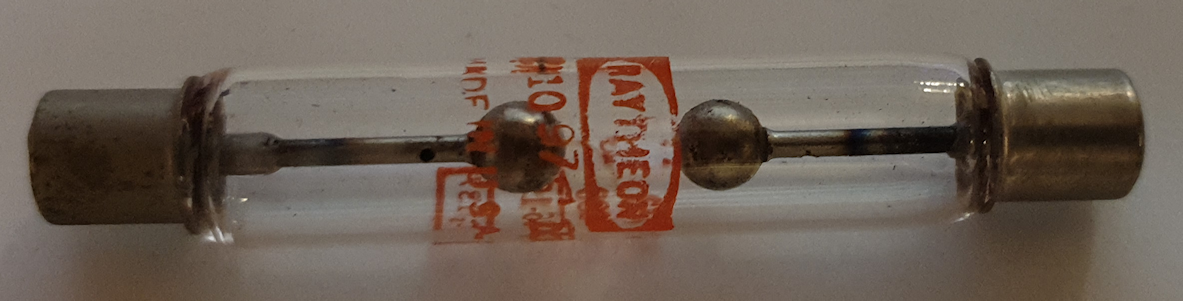
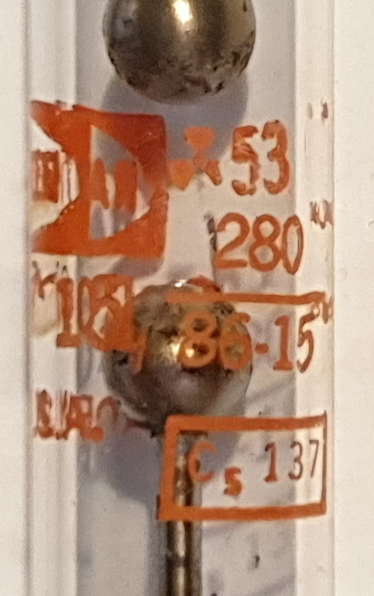
    I have found a relatively inexpensive source for a Cs137 check source. It is in the form of a 'new old stock' Raytheon CK1097-15 spark gap from ebay.co.uk. (No longer listed - You may find one by searching.) It isn't very active though. I bought it to use as a calibration source for my gamma spectrometer project I'm on with. I tested using a LND712 tube and got about 55 CPM tops (background was ~17 CPM) and had to place the spark gap right up to the end window of the LND712. Whilst not very active it should work well for calibration purposes.

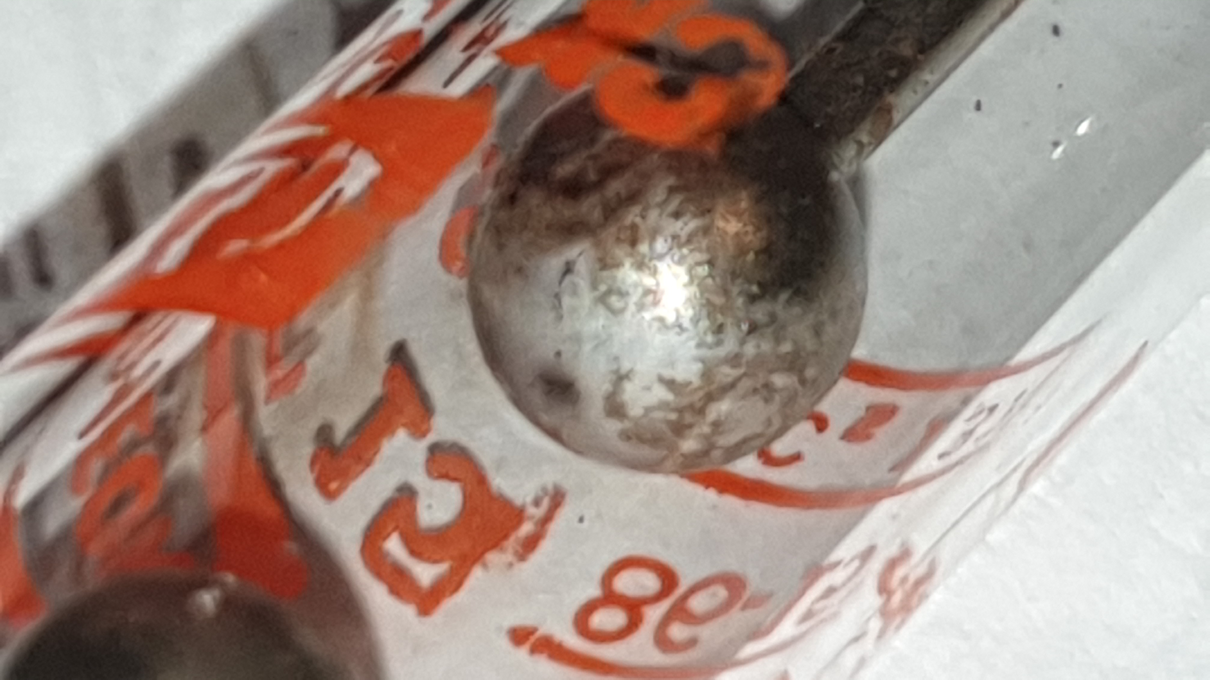
    It's hard to photo the printing on the spark gap and had to do so at an angle. I'm assuming the 86-15 part is a date code (week 15 1986) making it just over 30 years old and as the half life is Cs137 is about 30 years it would be literally half as active as when new. It looks like the electrodes were coated with Cs137 and from the pictures it looks like it has either decayed or there is corrosion/oxidization. An interesting find nonetheless.

    enter image description here

    enter image description here

    enter image description here

    A YouTube video by RH Electronics demonstrating the CK1097 spark gap's radioactivity: